OpenFront Largest Map Guide: Giant World Map Strategy Tips
Master the OpenFront largest map with our Giant World Map strategy guide. Learn about expansion, trade networks, and nuclear warfare for global dominance.
Published:
Table of Contents
Winning a match in OpenFront requires more than just fast clicking; it demands a deep understanding of the terrain you are fighting over. For players seeking the ultimate challenge, the openfront largest map—the Giant World Map—offers a scale that dwarfs regional skirmishes. Navigating the openfront largest map requires a shift in mindset, moving away from micro-intensive river battles toward long-form logistics and multi-front diplomatic maneuvering.
In this guide, we will break down the mechanics of the largest maps in the game, providing community-backed strategies for expansion, naval dominance, and late-game nuclear deterrence. Whether you are spawning in the heart of Europe or the vast steppes of Russia, understanding the scale of your environment is the first step toward the leaderboard's crown.
Understanding Map Scales in OpenFront
OpenFront categorizes its 127+ maps into several distinct groups based on geography and gameplay intent. While regional maps like the Balkans or the Great Lakes focus on tight chokepoints and immediate contact, the "Continental / Global" category is where the largest scales are found.
According to community reports and official database scans, maps are generally divided as follows:
Map Category
Total Maps
Expansion Cycle
Primary Gameplay Focus
Continental / Global
10
Longest
Trade networks, logistics, multi-front wars
Regional
96
Medium
Chokepoints, rivers, and naval straits
Fantasy / Space
8
Variable
Unique corridors (e.g., Mars, Milky Way)
Arcade / Tournament
13
Short/Fast
Symmetry and balanced competitive play
The openfront largest map, specifically the Giant World Map, sits at the top of the Continental hierarchy. With support for up to 115 players in a single free-for-all, the expansion phase lasts significantly longer than in a standard 50-player match. This allows for a more mature economy to develop before the first major player-on-player conflict occurs.
The Giant World Map: A Deep Dive
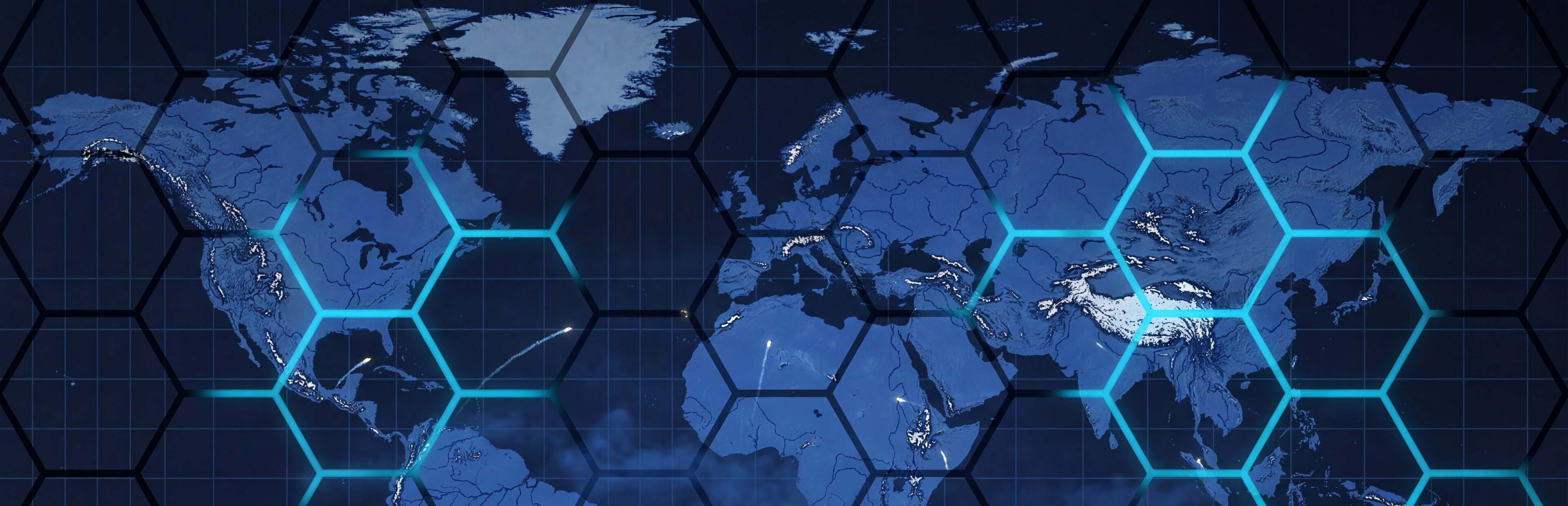
When players refer to the openfront largest map, they are almost always talking about the Giant World Map. This map encompasses the entire globe, providing massive landmasses like Africa, Eurasia, and the Americas. Because the land area is so vast, players often find themselves with "neighbor breathing room" early on, though this can be deceptive if a high-skill player spawns nearby.
Giant World Map Quick Facts
Player Count: Typically 85 to 115 players.
Key Feature: Long expansion cycles that reward players who prioritize structure efficiency over early aggression.
Victory Condition: Usually requires 80% land dominance, which is a monumental task on this scale.
Early Game: The Expansion Race
On the openfront largest map, your first 60 seconds are critical. Unlike smaller maps where you might fight for a single city, here you are fighting for a region. Community veterans suggest "boating" immediately. If you spawn in a coastal area, such as North Africa or Western Europe, you must launch boats to claim uninhabited islands (like Iceland or the Canary Isles) before they are sniped by distant neighbors.
The Mitochondria Strategy
In high-level play, you may encounter the "Mitochondria" player. This is a community term for a player who spawns directly next to a stronger player and offers an early alliance to act as a "structure farm." While sus to some, it can provide a massive boost to your early-game factory count if managed correctly.
Naval Power and the "Boating" Meta
On large-scale maps, water is not an obstacle—it is a highway. The openfront largest map features interconnected oceans and critical straits (like Gibraltar or Malacca) that can decide the outcome of the mid-game. If you do not control the seas, you cannot protect your trade routes or prevent naval invasions.
Naval Unit Comparison
Unit Type
Cost
Best Use Case
Common Mistake
Transport Ship
Low
Early expansion and island hopping
Sending them into active Warship zones
Warship
High
Area denial and shore bombardment
Forgetting to renew alliances before they arrive
Port
Variable
Logistics hub and naval spawn
Building too many in enclosed lakes
A common mistake on the openfront largest map is neglecting the "Self-Hydro Strat." Community reports suggest that if a juicy enemy base is protected by SAMs, you can sometimes "self-hydro" (detonate a Hydrogen bomb on your own nearby territory) to catch the enemy in the blast radius, bypassing traditional naval defenses.
Late-Game Logistics: Nukes and Merves
As the match progresses on the openfront largest map, the game shifts from troop movements to nuclear deterrence. Once the "Nuclear Age" begins, the cost of expansion rises exponentially. You are no longer just fighting for land; you are fighting to maintain your city count against Atom Bombs and Hydrogen Bombs.
Nuclear Arsenal Strategy
Atom Bombs: Use these for "micro-sniping" silos. If an enemy is building a Silo near your border, an immediate Atom Bomb can reset their progress without triggering a full-scale world war.
Hydrogen Bombs: These are your primary defensive tools. A well-placed Hydro can wipe out 400,000+ troops in a single blast. On the openfront largest map, always keep at least three Hydros in reserve to deter "roaching" (when smaller players all attack the leader at once).
MIRV Bombs (Merves): These are the game-enders. Costing upwards of 40–95 million gold depending on the inflation rate, a Merve can saturate an entire continent.
Weapon
Impact Radius
Gold Cost (Base)
Strategic Priority
Atom Bomb
Small
Low
Tactical Sniping
Hydrogen Bomb
Large
Medium
Strategic Deterrence
MIRV Bomb
Massive
Very High
Final Execution
The Betrayal Debuff
Never launch a nuke at an ally without checking the timer. A "Betrayal Debuff" reduces your troop effectiveness and can leave you vulnerable to a counter-push from the entire leaderboard.
Regional Comparison: Why Scale Matters
While the openfront largest map is the Giant World Map, other large-scale maps offer different challenges. For example, the Europe Map (60 players) is much more dense, leading to immediate "spawn snipes." Conversely, the Middle East Map (85 players) offers a high win rate for players who can control the Iranian plateau and the Strait of Hormuz.
Map Scale Comparison Table
Map Name
Player Capacity
Terrain Difficulty
Expansion Speed
Giant World Map
115
High (Rivers/Oceans)
Slow (Strategic)
Middle East
85
Medium (Mountains)
Moderate
Great Lakes
50
High (Lake Micro)
Fast
Los Angeles
80
Extreme (Blocky)
Agonizing
As noted by players in recent community matches, the Los Angeles map is often described as "agonizing" due to the sheer number of small blocks and river crossings, making it feel larger than it actually is in terms of land area. However, in terms of raw playable land and player slots, the Giant World Map remains the undisputed king.
Tips for Winning on the OpenFront Largest Map
To secure a victory on a global scale, you must master the art of the "Long Game." Here are four essential tips based on recent 100+ player match data:
Optimize Rail Networks: On the openfront largest map, distance is your enemy. Build factories and cities in clusters to maximize the efficiency of your rail and trade networks. This ensures a steady flow of gold for late-game Merves.
Alliance Renewal: Always monitor your alliance timers. In a 15-minute global match, a single second of expired alliance can lead to a "Hydro to the face."
Island Sanctuaries: Use your naval power to secure an island base (like Australia or Antarctica). If your mainland position is nuked, these "remnant lands" can keep you in the game long enough to rebuild.
The Element of Surprise: Don't telegraph your Merve. Save up the 95 million gold quietly, and only launch when you are ready to push for the final 80% land requirement.
Common Mistakes to Avoid
Overextending Early: Don't spend all your troops on bots. If you have zero troops when your first neighbor arrives, you will be roached immediately.
Ignoring SAMs: While some players claim SAMs are weak in the current meta, they are essential on large maps to prevent "Atom Bomb micro-sniping" of your expensive factories.
Naval Tunnel Vision: Don't spend all your money on Warships if you are losing land cities. Land is where your gold comes from; ships only protect it.
FAQ: Navigating the OpenFront Largest Map
What is officially the openfront largest map?
The Giant World Map is the largest map in OpenFront, supporting up to 115 players and covering the entire globe. It features the longest expansion cycle and requires the most complex logistics to master.
How do I manage land expansion on such a huge scale?
Prioritize "boating" to claim distant coastal territories and islands. Use the first 2-3 minutes of the game to secure a large enough city base (aim for 15-20 cities) before engaging in major player wars.
Are nuclear weapons different on the Giant World Map?
The mechanics are the same, but the impact is greater. Because players have more space to build "Dwarven Forts" (heavily fortified clusters of cities), you will often need multiple Hydrogen bombs or a MIRV to successfully crack a top-tier player's defense.
Why is boating so important on large maps?
Boating allows you to bypass land chokepoints and rivers. On maps like the Giant World Map or Great Lakes, water access is the difference between being trapped in a corner and having the mobility to strike anywhere on the board.